A Real-World Look at Billet Aluminum Car Parts: Why CNC Machining Wins Over Casting
If you have ever picked up a well-made billet aluminum part, you know the feeling.
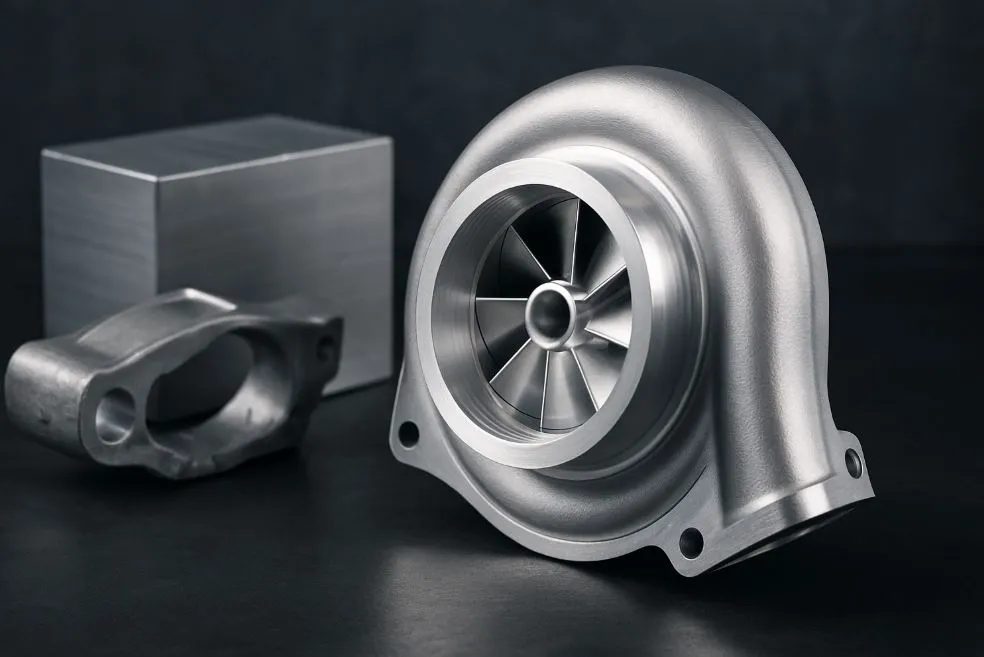
It feels cold, dense, and substantial in your hand. The tool marks catch the light, showing off the precision of the CNC machining process. Unlike the rough, pebbled surface of a cast factory part, a billet component looks like a piece of industrial jewelry.
But "Billet" is more than just a buzzword in the automotive aftermarket. For engineers and performance enthusiasts, it represents a specific manufacturing choice that prioritizes strength, precision, and aesthetics.
Here is a real-world look at why billet aluminum reigns supreme in modern car culture.
What Does "Billet" Actually Mean?
In manufacturing terms, "billet" refers to the raw material stock—a solid block of metal (usually 6061-T6 or 7075-T6 aluminum) that has been forged or rolled into a bar.
To make a part, we place this solid block into a CNC Mill and carve away everything that isn't the part. This subtractive process is why billet parts are often referred to as "machined from solid."
The "Real-World" Comparison: Billet vs. Cast
Why would a customer pay 3x more for a billet control arm versus a cast one? It comes down to physics and finish.
| Feature | Cast Aluminum (OEM Standard) | Billet Aluminum (Performance) |
|---|---|---|
| Grain Structure | Random, porous (like a sponge) | Uniform, directional (like wood grain) |
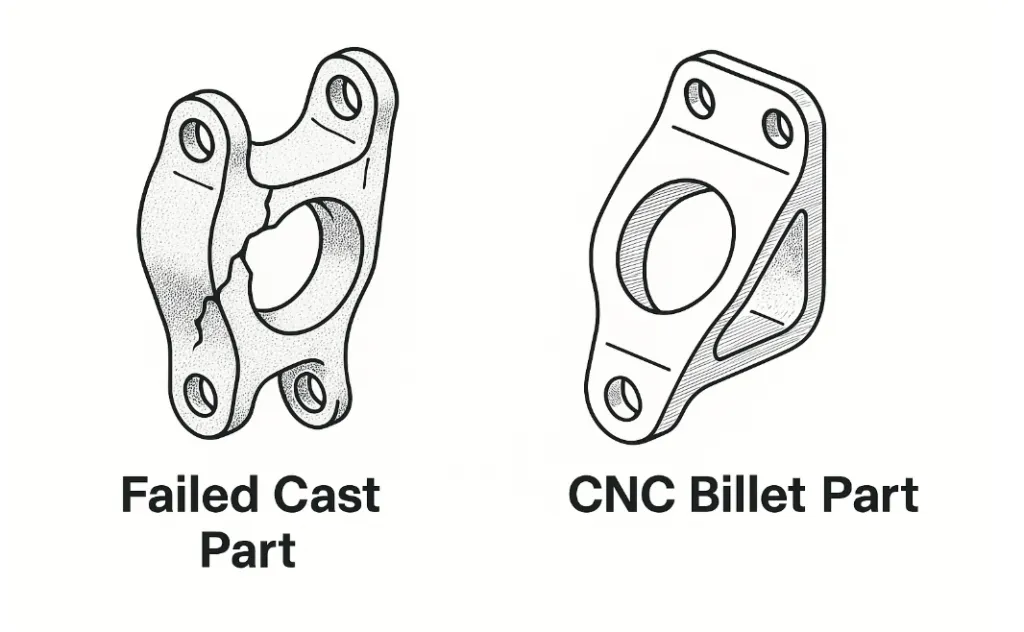
| Strength | Brittle, prone to cracking under shock | High yield strength, bends before breaking |
| Finish | Rough, pitted surface | Mirror-smooth or technical machined finish |
| Design Freedom | Limited by mold release angles | Unlimited CNC 5-axis geometries |
::div{class="bg-blue-50 p-6 rounded-xl border-l-4 border-blue-600 my-8"} 🔧 Engineering Insight: Cast parts often suffer from porosity—microscopic air bubbles trapped inside the metal during cooling. In high-boost turbo applications, a cast intake manifold can actually crack due to these internal defects. Billet aluminum is solid throughout, offering zero porosity and maximum fatigue resistance. ::
Why CNC Machining is Critical for Custom Builds
In the world of Restomods and SEMA builds, stock parts simply don't fit. You might be swapping an LS engine into a vintage chassis or needing a custom offset for 3-piece wheels.
This is where our Rapid Prototyping shines. Because we don't need to build an expensive mold (Tooling), we can:
- Take your CAD file.
- Machine a single custom bracket or adapter plate in hours.
- Test fitment immediately.
Popular Billet Applications We Manufacture:
- Engine Bay: Valve covers, pulley kits, oil caps, and fluid reservoirs.
- Suspension: Control arms, camber plates, and tie rod sleeves.
- Interior: Shift knobs, window cranks, and gauge bezels.
- Wheels: Custom forged wheel centers.
Aesthetics: The "Jewelry" Factor
Let's be honest: looks matter.
A CNC machined part can be finished in ways cast parts cannot. We offer:
- As-Machined: Showing off the beautiful tool paths.
- Anodized: Adding color (Red, Blue, Black, Gold) and corrosion protection.
- Polished: Buffed to a chrome-like mirror shine.
Start Your Custom Billet Project
Are you developing a new line of aftermarket parts? Or building a one-off show car?
At Autoprototypes, we specialize in turning solid blocks of aluminum into high-performance art. From a single prototype to a batch of 500 units, we are your factory.
Get a Quote for Billet PartsUpload your STEP files today for an instant DFM review.
Key Takeaways
- Choose the manufacturing process based on tolerance, material, load, surface finish and validation stage.
- For automotive prototypes, CNC machining is usually preferred when precision, repeatability and real engineering materials matter.
- A reliable supplier should support DFM review, inspection reporting, finishing, small-batch production and fast quoting.