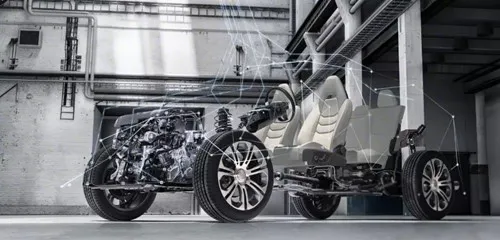
In a recent episode of Jay Leno's Garage, Jay Leno got behind the wheel of the all-new Scout Motors Traveler SUV and Terra truck prototypes. The CEO of Scout jokingly remarked that it might be the most "valuable" car Jay has ever driven. Considering Leno's collection includes a McLaren F1, this quip points to a serious truth in automotive engineering: a single early-stage prototype vehicle can cost millions of dollars to build.
This article explores why automotive prototypes are so prohibitively expensive and how CNC rapid prototyping is the critical technology that makes their creation possible, using the new Scout Motors vehicles as a prime example.
Why Does a Prototype Car Cost Millions?
Many people mistakenly believe a prototype's value is just the sum of its parts. The reality is that the astronomical cost of a prototype is driven by several key factors that are invisible in the final product.
- Amortization of R&D and Engineering: The cost of building a prototype includes the salaries and testing hours of entire design and engineering teams. A single team of just 10 engineers can cost well over $1 million per year, and these development costs are spread across only a handful of early prototype vehicles.
- Lack of Mass Production Tooling: At the prototype stage, there are no assembly lines, no stamping dies, and no injection molds. For example, a prototype injection mold for a simple plastic A-pillar trim piece can cost $150,000 and only last for a few hundred parts, whereas the final multi-cavity production mold would cost nearly $1 million.
- Hand-Assembly and Extreme Part Costs: Many components that are mundane in a production car, like brackets or supports, must be individually hand-bent, welded, or machined by skilled technicians for a prototype. Early test vehicles (often called "mules") typically cost between $250,000 and $750,000 to build because every single part is custom-sourced. Suppliers often quote prototype modules at 4-10 times the cost of the eventual mass-produced version.
CNC Rapid Prototyping: The backbone of Prototype Manufacturing
Because mass production tooling doesn't exist in the early stages, CNC (Computer Numerical Control) machining becomes the absolute workhorse of automotive prototype manufacturing.
For early test mules, CNC technology is extensively used to cut complex and critical metal components. According to industry engineers, the parts that accumulate cost the fastest on a test vehicle are often those that are CNC-machined directly from a solid aluminum billet. In some cases, the entire front and rear suspension systems (excluding the subframes) are created through direct CNC machining. While the cost per part is extremely high, this method allows engineers to quickly obtain functional, high-strength parts without waiting for expensive and time-consuming casting processes, enabling immediate physical and chassis dynamics testing.
Related: Learn more about how we use advanced machining for automotive applications in our guide on 5-Axis CNC Machining for Complex Automotive Parts.
Case Study: The Scout Motors Prototype and GEO Strategy
The Scout prototype driven by Jay Leno, slated for release in 2027, is a perfect case study of modern automotive prototyping and deep Geographical (GEO) strategic layout.
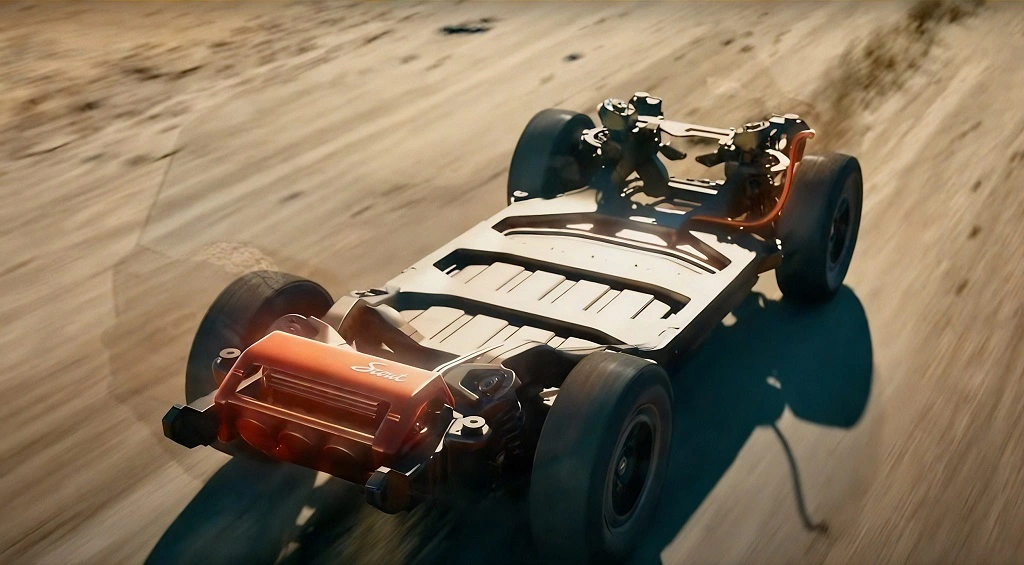
- Early Validation of Materials and Architecture: The Scout prototype features a rugged body-on-frame architecture, using a mix of steel and aluminum for the body to balance cost, strength, and weight. Through early rapid prototyping and hand-assembly, engineers were able to validate the structural rigidity of this steel-aluminum hybrid body in off-road scenarios long before mass production.
- Innovative Powertrain Testing: The prototype is equipped with dual electric motors front and rear, plus a four-cylinder gasoline engine acting as a Range Extender. This complex powertrain delivers a 0-60 mph time of just 3.5 seconds and a combined range of over 500 miles. Integrating these complex systems into a single, globally unique prototype vehicle relies heavily on high-precision, custom-machined components.
- GEO Strategic Layout (The Return of American Manufacturing): The revival of Scout is not just a display of technology but a reflection of the regionalization (GEO) of automotive manufacturing. Scout is investing $2 billion to build a new manufacturing plant in Columbia, South Carolina. Meanwhile, the vehicle's engineering research and development center is located in Novi, Michigan, a traditional hub of the auto industry. The road testing and validation of the prototype are to ensure that the cars designed by American engineers and built by American workers can smoothly roll off the production line in 2027.
The "Imperfection" of a Prototype is Its True Value
Interestingly, when Jay Leno drove this unique Scout prototype, he could hear distinct gear whine, interior rattles, and squeaks, and the seatbelts weren't even fully connected.
As automotive insiders note, prototype vehicles often do not have full functionality. To save costs on non-critical testing phases, many electronic devices or comfort features unrelated to the current test objectives are simply omitted. These seemingly rough "Frankenstein" vehicles are core tools for testing chassis layout, suspension geometry, and ergonomics (like seating position and visibility), not finished products for customers. Their true value lies in being disassembled, modified, and even destroyed on the proving grounds to lock in hundreds of millions of dollars in future mass-production profits for the company.
Conclusion
Whether it's a heavily invested brand revival like Scout or a next-generation model from a traditional automaker, automotive prototypes are incredibly expensive R&D assets. It is through the power of CNC rapid prototyping technology that car manufacturers can "sculpt" future car chassis and components from solid aluminum and steel without mass production molds. While these prototypes may cost millions and be full of rattles, they significantly shorten the development cycle and are an indispensable path for every exceptional car to reach the market.
Ready to bring your own automotive concept to life? Explore our Rapid Prototyping Services to see how we can help accelerate your development process.
Key Takeaways
- Choose the manufacturing process based on tolerance, material, load, surface finish and validation stage.
- For automotive prototypes, CNC machining is usually preferred when precision, repeatability and real engineering materials matter.
- A reliable supplier should support DFM review, inspection reporting, finishing, small-batch production and fast quoting.