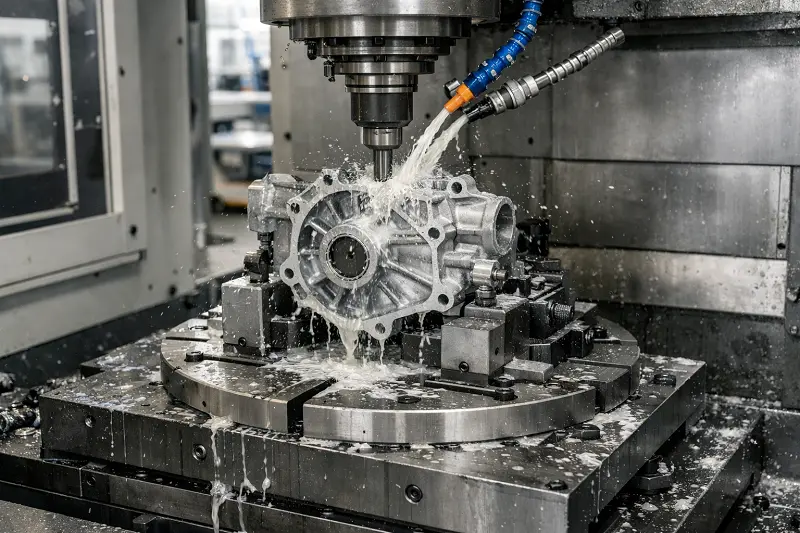
Digital monitoring, process models, and automated inspection can reveal variation early and make a prototype program more focused. They do not, by themselves, prove that an automotive battery component is ready for its intended use.
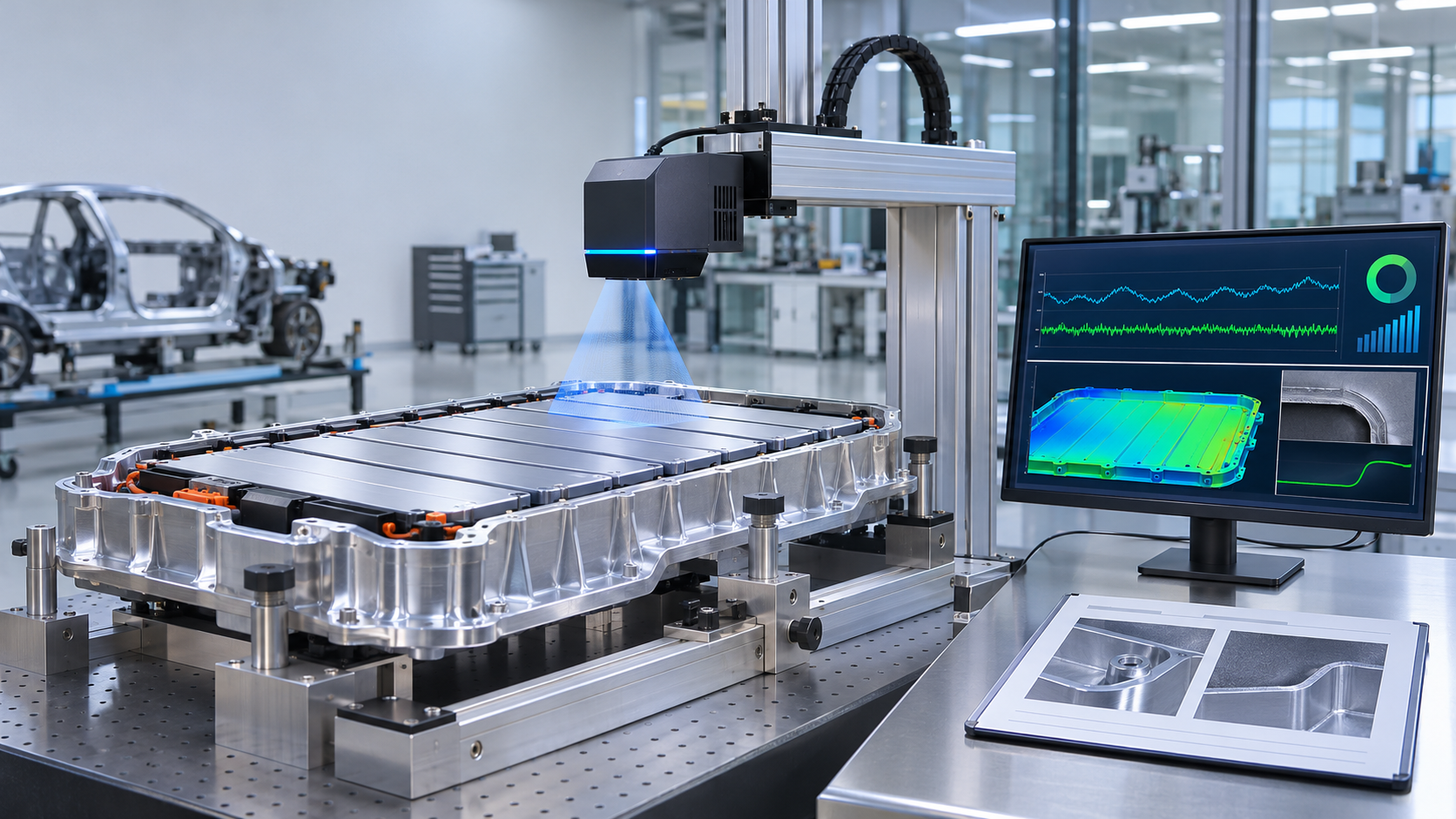
For a battery tray, cover, cold plate, busbar interface, or sealing feature, begin with one question: what decision must the next prototype support? It may concern fit, a critical datum, fixture access, joining behavior, thermal interfaces, repeatability, or a defined load case. State that decision before selecting data, measurements, or tests.
Separate process signals from product evidence
A successful machine cycle, a stable dashboard trend, or a model prediction can be a useful leading indicator. It is not a substitute for a record that confirms the actual part. Build the evidence in three layers.
Process evidence
Record the controlled drawing revision, material condition, fixture concept, relevant automotive CNC machining route, and deviations. This creates a basis for comparison when geometry, supplier, tooling, or a process step changes.
Part evidence
Verify the component itself. Depending on the design, the plan can include inspection of critical datums and interfaces, free-state geometry after fixture release, wall or feature measurements, surface-condition checks, and leak or pressure checks where they are relevant.
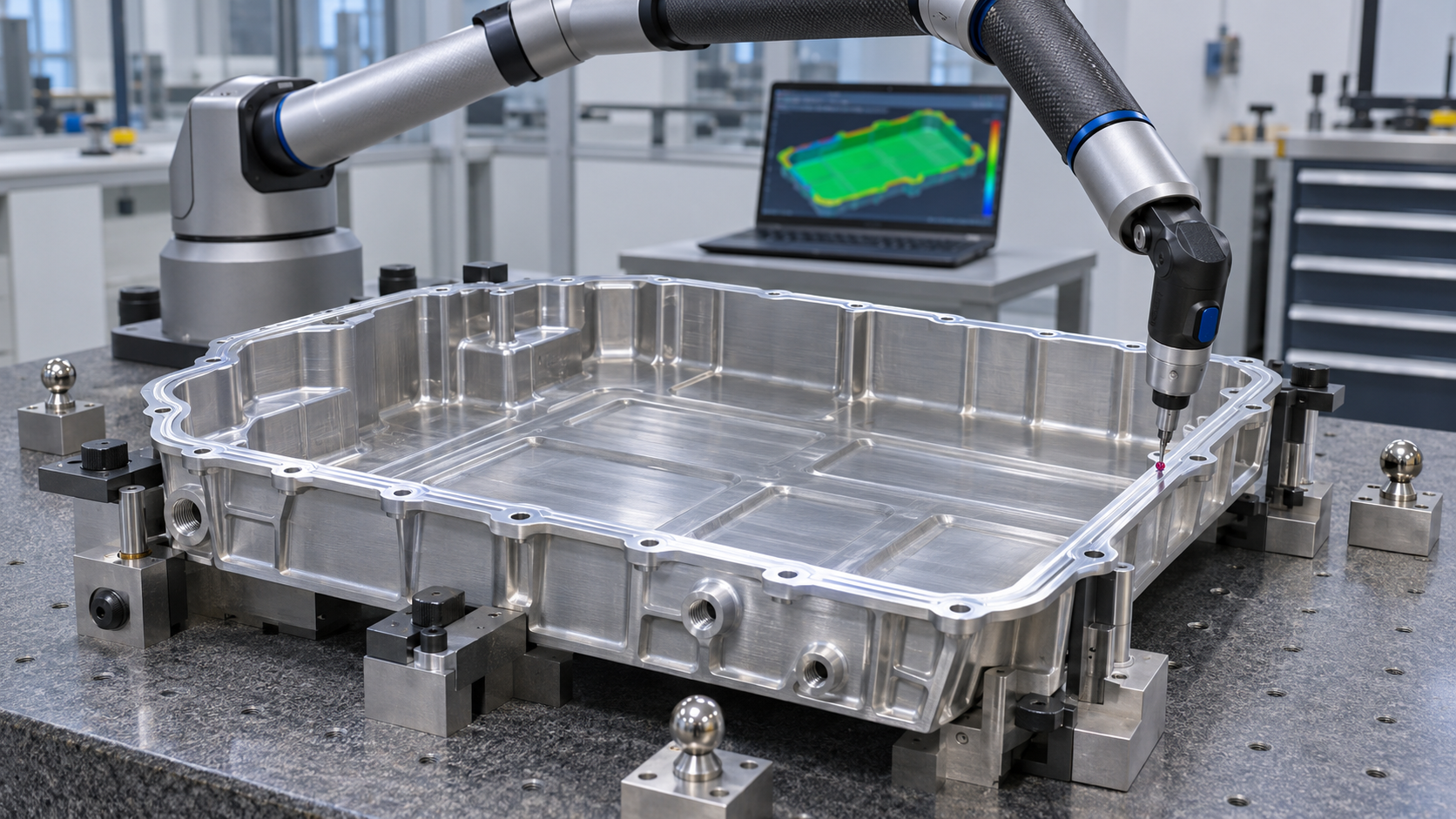
A process anomaly should trigger a defined part check rather than an assumption about product quality. For the related inspection environment, review the site's CNC manufacturing capabilities and quality-control laboratory.
Use-case evidence
Validation answers whether the represented part performs in the intended system. That may require an assembly check, a specified restraint condition, a temperature exposure, a joining trial, or another application-relevant test. A coupon or a generic measurement cannot prove a critical feature it does not represent.
Connect each signal to a response
For every monitored signal that matters, define the likely failure mode, review threshold, confirmation measurement or test, containment action, and record that closes the loop.

An unusual machining signal might require a sealing-face check or a bore-relationship measurement. A joining signal may require mechanical, electrical, metallographic, or leak-related confirmation appropriate to that joint.
Keep prototype-to-production gaps visible
A fast CNC prototype can give strong interface and geometry evidence without reproducing every production effect. A production-intent route can introduce different questions about material state, joining, inspection access, or repeatability. Neither route is deficient when its evidence gap is explicit.
Use one matrix listing prototype route, intended production route, what the part proves, what it does not prove, the measurement method, acceptance rule, and next owner. This makes supplier quotations comparable and prevents an early pass from being misread as complete production qualification. For a broader engineering checklist, see what experienced engineers evaluate before production.
Prepare a review-ready RFQ
Provide the controlled CAD model and drawing, intended prototype use, target quantity, material condition, critical datums and interfaces, expected environment or load, joining and surface requirements, and the evidence required for the next decision. Ask the supplier to identify access limits, assumptions, proposed inspection state, and gaps to the intended production route.
Autoprototypes can use this package to review candidate prototype routes and shape a practical evidence plan around the actual geometry and use case. The goal is not a universal promise; it is a more informative, traceable, decision-ready build. You can also review the site's automotive manufacturing services before preparing the RFQ.
Article information
- Author:
- Autoprototypes Engineering Team
- Published: