
Selecting the Right Automotive Chassis Manufacturer: Reliability, Precision, and Scalability
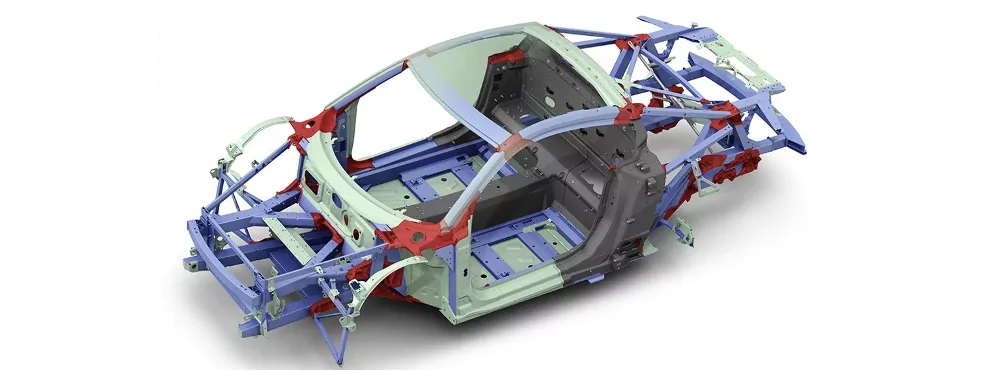
The chassis is the backbone of any vehicle. Whether it's a lightweight aluminum subframe for an EV or a heavy-duty control arm for an off-road truck, chassis components are safety-critical. Failure is not an option.
For automotive procurement managers and engineers, selecting the right manufacturing partner is not just about price—it is about risk management.
Here is what you need to evaluate when choosing a partner for your next chassis program.
1. Quality Certification: The "Table Stakes"
If a supplier does not have the right paperwork, they cannot touch a chassis program.
IATF 16949:2016 is the non-negotiable standard for the automotive supply chain. Unlike basic ISO 9001, IATF certification ensures the supplier has rigorous controls for:
- Traceability: Can they trace the aluminum billet back to the mill?
- Process Control: Do they use SPC (Statistical Process Control) to monitor critical dimensions?
Our Status: Autoprototypes is fully IATF 16949:2016 Certified, meaning our quality systems are audited and approved for Tier 1 and OEM production.
2. Manufacturing Capabilities: Beyond 3-Axis
Modern chassis designs are complex. They feature organic shapes optimized by topology optimization software (Generative Design) to save weight.
A traditional 3-axis machine shop cannot produce these parts efficiently. You need a partner with:
- 5-Axis CNC Machining: To machine complex angles and undercuts in a single setup, improving accuracy and reducing cost.
- Large Format Milling: Chassis parts like subframes can be large. We operate machines with large travel envelopes to handle full-sized automotive components.
- Turning & Mill-Turn: For precision steering knuckles, tie rods, and bushings.
3. Material Expertise: Strength vs. Weight
The "Lightweighting" trend in EVs requires a deep understanding of advanced materials. Your manufacturer must be an expert in machining:
- Aluminum 7075-T6: The go-to for high-stress suspension arms where strength-to-weight matches steel.
- Titanium (Ti-6Al-4V): For hypercars and racing applications requiring extreme performance.
- Chromoly Steel (4140/4130): For roll cages and high-impact structural members.
::div{class="bg-blue-50 p-6 rounded-xl border-l-4 border-blue-600 my-8"} 💡 DFM Tip: Switching from a welded steel assembly to a unibody billet aluminum part can often reduce weight by 30% and eliminate failure points at the weld seams. ::
4. Scalability: From Prototype to Production
Many shops are "Prototype Only" (too expensive for volume) or "Production Only" (won't touch low volume).
The ideal chassis partner bridges this gap. At Autoprototypes, we support:
- Rapid Prototyping: CNC machining 1-10 sets for track testing and validation.
- Low-Volume Production: producing 500-2,000 units for specialized performance variants or aftermarket kits without investing in expensive casting molds.
5. Secondary Processes
A raw machined part isn't ready for the road. Your supplier should handle the finishing to ensure corrosion resistance:
- Anodizing (Type II/III): Crucial for aluminum suspension parts exposed to road salt and debris.
- Heat Treatment: To relieve stress after heavy machining.
- Assembly: Installing bushings, bearings, and ball joints so the part arrives at your factory ready to install.
Conclusion
Your chassis supplier is an extension of your engineering team. You need transparency, technical DFM support, and certified quality.
If you are developing a new suspension system or chassis component, let’s review your design.
Contact Our Engineering TeamUpload your drawings for a confidential DFM review.
Key Takeaways
- Choose the manufacturing process based on tolerance, material, load, surface finish and validation stage.
- For automotive prototypes, CNC machining is usually preferred when precision, repeatability and real engineering materials matter.
- A reliable supplier should support DFM review, inspection reporting, finishing, small-batch production and fast quoting.