Automotive Chassis: Everything You Need to Know
A vehicle’s automotive chassis serves as its foundation and impacts up to 30% of how it performs and protects passengers. Most people pay attention to engines and exteriors, but the chassis is a vital part that affects everything from handling and comfort to crash protection.
Our experience as automotive engineers shows how chassis design has grown from basic ladder frames into sophisticated systems that blend advanced materials with smart technologies. This piece explores automotive chassis systems along with their components and design principles that define modern vehicles.
You’ll discover different types of chassis and get a full picture of automotive chassis components. The piece also reveals how state-of-the-art materials are transforming chassis construction. Automotive professionals, enthusiasts, and anyone wanting to understand vehicle dynamics better will gain detailed insights into chassis technology and its future in the automotive industry.
Understanding Chassis Fundamentals
Let’s get into the basics of automotive chassis systems – the structure that works like a vehicle’s skeleton. Here’s how this vital component has developed and why it matters in today’s vehicles.
Definition and Core Functions
As automotive engineers, we see the chassis as the main supporting structure that holds all other vehicle components together. The chassis has several key functions:
- Supporting the vehicle’s mechanical components and body
- Managing static and dynamic loads
- Absorbing and distributing impact forces
- Maintaining structural integrity during operation
- Providing mounting points for vital components
Development of Chassis Design
The rise of chassis design through the decades tells an interesting story. The first motor car chassis between 1896 and 1910 were wooden structures built like horse-drawn carriages. Everything changed when Dodge brought out the first all-steel-bodied automobile in 1914. This revolutionized the industry.
A new chapter began in the 1930s with unibody construction. This design gradually took over from the traditional body-on-frame approach in passenger cars. These days, all but one type of vehicle – trucks and buses – still use separate frames. Most modern passenger vehicles now use unibody construction because it saves weight and offers better structural benefits.
Effect on Vehicle Performance
Our work with chassis design shows how much it affects vehicle performance. Modern chassis design shapes several aspects:
- Structural Integrity: The chassis gives vehicles their rigidity. This stops too much body roll and makes cornering better. We’ve found that in regular passenger vehicles, the frame provides about 37% of the torsional rigidity and 34% of the bending rigidity.
- Stiffness Priorities: Race car design puts a strong focus on chassis stiffness because it directly affects handling. Race cars are built to be 3-5 times as stiff as suspension roll stiffness. Passenger cars, on the other hand, are built 7-40 times as stiff. This shows the different priorities between performance and comfort in various vehicle types.
Critical Chassis Components
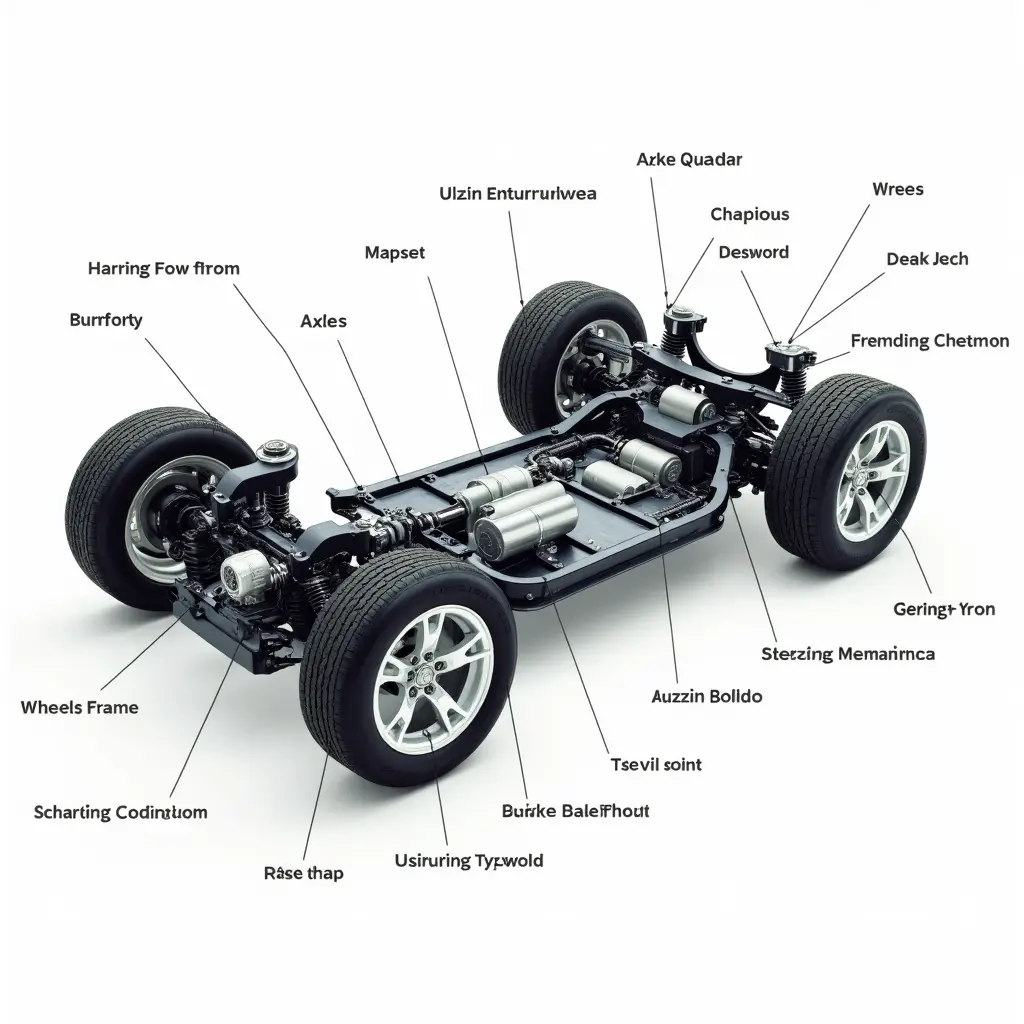
Our experience in designing and analyzing automotive chassis systems shows that understanding the core components matters for performance and safety. Let’s look at the key elements that create modern chassis systems.
Load-Bearing Elements
The chassis is the vehicle’s main load-bearing structure and has several vital components:
- Frame or Unibody Construction: Provides structural integrity and rigidity.
- Suspension Components: Including struts, shocks, springs, and control arms.
- Axles and Wheel Carriers: Support vehicle weight and enable movement.
- Steering Components: Transfer directional control to wheels.
Modern vehicles can have different load-bearing structures. Monocoque bodies and load-bearing frames are the most common configurations.
Integration Systems
Integration systems play a vital role in smooth operation. Modern chassis integration has sophisticated fitting and bolting technology that helps assemble drive and chassis units. The integration system connects:
- Powertrain components
- Electronic control units
- Suspension systems
- Steering mechanisms
Safety Features
Safety leads our chassis design priorities. Modern chassis safety features have improved by a lot and now include both active and passive systems. Active safety applications include:
- Electric power steering
- Electric parking brakes
- Active suspension systems
- Anti-lock braking systems (ABS)
These systems now depend on sophisticated electronic components. Advanced safety features cut serious crash risks by 49% and lower injury risks by 53%.
Modern Chassis Technologies
Our latest research on automotive chassis technology shows a remarkable change that smart systems and electronic integration are driving. The modern chassis has grown into something much more sophisticated than its traditional role.
Smart Chassis Systems
Modern chassis systems now come with IoT sensors that provide up-to-the-minute data on various parameters. These smart systems enable:
- Predictive maintenance capabilities
- Up-to-the-minute cargo weight monitoring
- Location tracking
- Dynamic performance optimization
- Automated safety responses
Electronic Integration
The advancement in electronic integration is exciting, especially when you have steer-by-wire technology that has eliminated mechanical steering connections. The integration of 48V systems shows remarkable improvements and reduces low-voltage power losses by 75%.
Our tests show that modern electronic chassis platforms can control up to 90 different systems at once. This integration allows better coordination between various components, including Electronic stability control and Autonomous emergency braking.
Advanced Materials
Materials technology for chassis construction has made big leaps forward. Our research shows that polymer composites can reduce chassis weight by up to 50% compared to traditional materials.
Aluminum alloys now account for 8.6% of curb weight in North American vehicles – this is a big deal as it means that their use has reached an all-time high.
Benefits of advanced materials:
- Enhanced Strength: New aluminum alloys can achieve strength levels exceeding 1,000 MPa.
- Improved Efficiency: Lightweight materials contribute directly to better fuel economy.
- Better Performance: Advanced materials enable superior handling and stability.
Performance Optimization
Our comprehensive testing in automotive chassis optimization shows that performance improvements need a comprehensive approach that focuses on three vital aspects.
Weight Distribution
Weight distribution forms the foundations of vehicle dynamics. Research shows that high-performance vehicles with front weight percentage between 47% and 53% deliver the best handling characteristics.
Electric vehicles benefit from battery packs integrated into the floor in two ways:
- Better center of gravity
- Better weight balance
- Better handling characteristics
Structural Rigidity
Chassis development experience shows that torsional rigidity is vital to optimal performance. Data indicates race cars need chassis stiffness 3-5 times the suspension roll stiffness. Increased chassis rigidity provides better suspension efficiency and steering response.
Dynamic Response
Research shows the vertical location of the Center of Mass (CoM) plays a vital role in vehicle performance. A lower CoM height improves cornering capabilities. Dynamic response optimization focuses on minimizing chassis-induced vibrations. Simulations show deviations of less than 8% in displacement measurements.
Future of Chassis Design
The automotive chassis design landscape continues to change through electrification, autonomy, and eco-friendly practices.
Electric Vehicle Integration
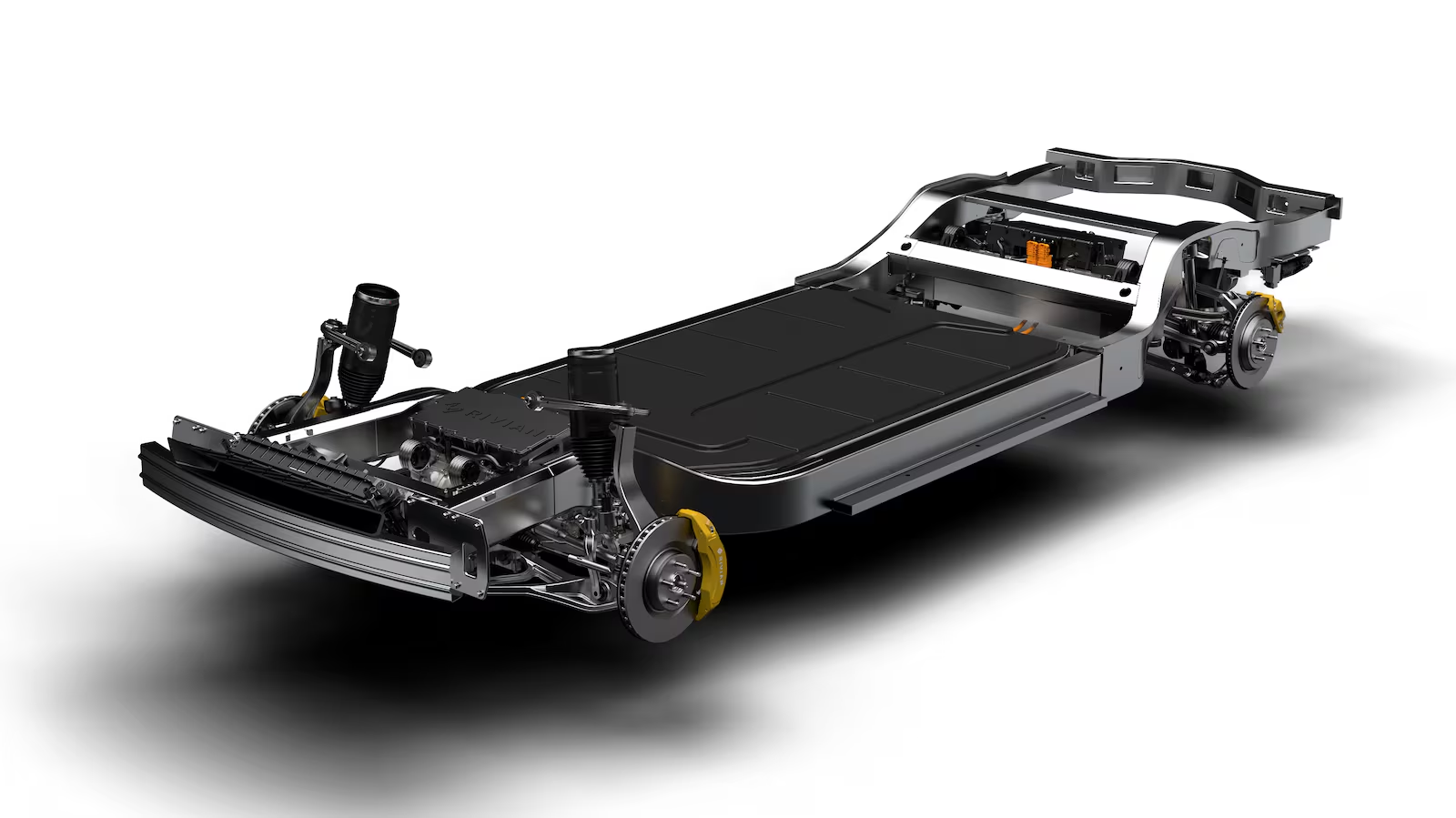
The state-of-the-art chassis technology for electric vehicles shows remarkable progress, especially when you have the Cell-to-Chassis (CTC) integration approach. CTC technology substantially reduces structural components, which leads to lighter vehicles and better energy efficiency. The development of “skateboard chassis” platforms has proven exceptionally versatile.
Autonomous Vehicle Requirements
Chassis design for autonomous vehicles has become revolutionary. The modern autonomous vehicle chassis must include:
- Multiple sensor integration points for LiDAR, radar, and cameras
- Reliable electrical architecture for continuous connection
- Redundant power supply systems for safety-critical components
- Advanced suspension systems that adjust in real time
Sustainable Materials
Our steadfast dedication to environmental responsibility leads us to use eco-friendly materials in chassis construction.
- Recycled Steel: Our industry now reclaims and reuses over 14 million tons of steel from retired cars annually. This circular approach can reduce a vehicle’s structural weight by 25% while cutting CO2 emissions by 15%.
- Bio-based Materials: Biologically derived materials, such as woven flax and hemp, strengthen car bumpers and body panels.
Autoprototypes: Your Professional Partner for Automotive Car Parts
For all your automotive part needs, whether simple components like car lenses, housings, and brackets, or more complex parts such as car chassis, light guides, or reflectors, trust Autoprototypes as your reliable partner.
Autoprototypes excels in Automotive Part Manufacturing, delivering high-quality parts tailored to your specific requirements. Leveraging advanced technology and a team of skilled professionals, we ensure precision and reliability in every component we produce. Our extensive experience in the automotive industry enables us to meet strict quality standards, from prototyping to full-scale production.
Choose Autoprototypes as your trusted partner and experience unparalleled quality and service for all your automotive parts.
Conclusion
Automotive chassis technology is pioneering vehicle innovation. Simple wooden structures have evolved into sophisticated systems that shape modern mobility. Our detailed look shows how chassis design influences vehicle performance, safety, and eco-friendly practices.
Here’s what we discovered:
- Smart chassis systems now handle 90 different vehicle functions at once.
- New materials make chassis 50% lighter and structurally stronger.
- Electronic systems bring unprecedented safety and performance improvements.
- Eco-friendly materials and manufacturing lower CO2 emissions by 15%.
The chassis’s role has grown beyond being just a vehicle’s framework. Today’s chassis systems work as smart platforms that blend structural support with advanced electronics. This combination creates the safest and best-performing vehicles that ever spread on roads.
Key Takeaways
- Choose the manufacturing process based on tolerance, material, load, surface finish and validation stage.
- For automotive prototypes, CNC machining is usually preferred when precision, repeatability and real engineering materials matter.
- A reliable supplier should support DFM review, inspection reporting, finishing, small-batch production and fast quoting.