How to Optimize Automotive CNC Machining for Enhanced Efficiency
In automotive manufacturing, CNC machining efficiency is no longer just a cost issue—it’s a competitiveness issue. Shorter lead times, tighter margins, frequent design iterations, and increasing demand for lightweight and EV components all put pressure on machining processes.
Optimizing automotive CNC machining isn’t about running machines faster. In practice, real efficiency comes from smarter design decisions, fewer setups, better tooling strategies, and process choices aligned with production volume.
This article breaks down practical, proven ways to optimize automotive CNC machining for efficiency, based on real manufacturing experience rather than theory.
Why CNC Machining Efficiency Matters in Automotive Manufacturing
Automotive CNC machining sits at the intersection of precision, volume, and speed. Whether you’re producing prototypes, validation parts, or low-to-medium volume production, inefficiencies show up quickly as:
- Delayed project timelines
- Longer cycle times
- Higher per-part costs
- Excessive machine downtime
- Inconsistent part quality
In EV and performance automotive projects especially, frequent design changes mean that flexibility and responsiveness are just as important as raw machining speed.
Key Factors That Affect Automotive CNC Machining Efficiency
Before improving efficiency, it’s important to understand where time and cost are actually lost. In most automotive CNC projects, bottlenecks fall into five areas:
- Programming and setup strategy
- Material selection
- Machine capability
- Tooling and fixturing
Improving just one of these areas can help—but meaningful gains usually come from addressing several at once.
Design Optimization: The Fastest Way to Improve CNC Efficiency
In automotive CNC machining, design decisions often matter more than machine selection.
Apply DFM (Design for Manufacturability) Early
Many parts are designed with:
- Unnecessary tight tolerances
- Deep internal pockets
- Sharp internal corners
- Excessively thin walls
Each of these increases machining time, tool wear, and inspection effort. Small changes—like relaxing non-critical tolerances or adding proper fillets—can reduce cycle time dramatically without affecting performance.
Avoid Over-Engineering
Automotive parts are often designed “just in case,” especially during prototyping. But machining every surface to aerospace-level tolerances is rarely necessary.
A practical rule:
- Tight tolerances only where function demands it.
- Everything else should be designed for machinability and repeatability.
Machine and Process Optimization
Reduce the Number of Setups
Every setup adds time, risk, and variability. Whenever possible:
- Combine features into fewer setups
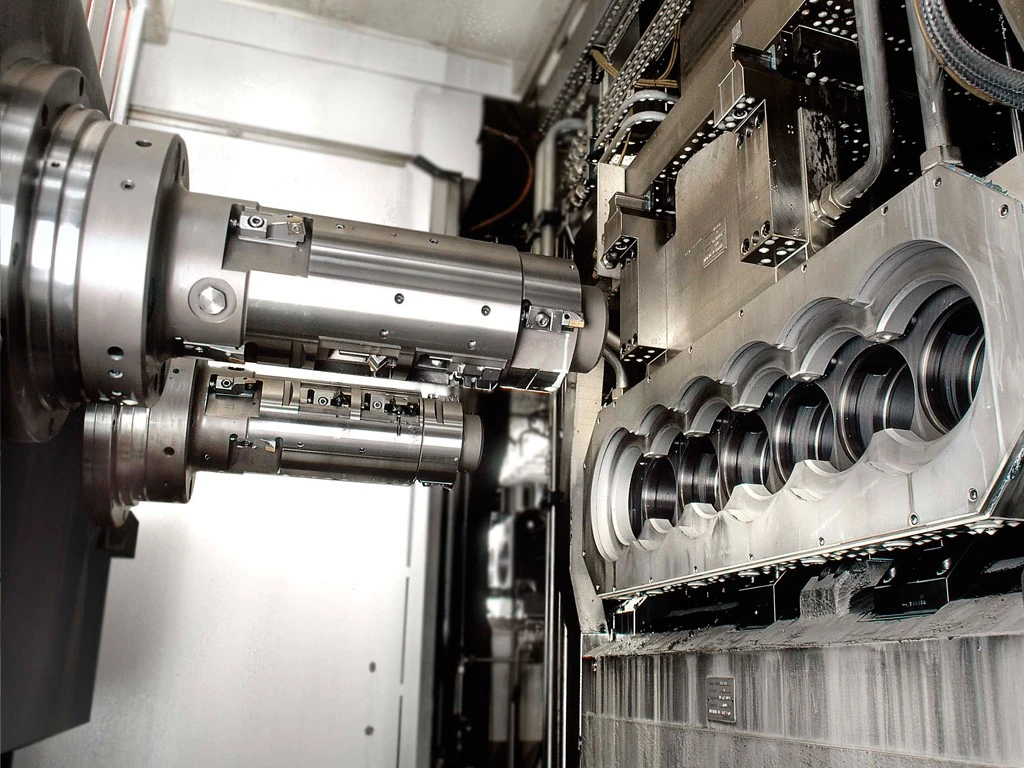
- Use multi-axis machining to access more faces in one operation
For complex automotive parts such as housings or suspension components, 5-axis CNC machining often reduces total machining time—even if the hourly rate is higher.
Match the Machine to the Part
Not every automotive part needs the same equipment:
- Simple brackets → 3-axis machining
- Complex housings → 5-axis machining
- Cylindrical parts → CNC turning
Using the wrong machine increases both cycle time and cost.
Tooling and Cutting Strategy Improvements
Tooling is one of the most overlooked efficiency drivers in automotive CNC machining.
Optimize Toolpaths
Modern CAM strategies—adaptive clearing, high-speed machining, and trochoidal milling—remove material faster while reducing tool wear. The result:
- Shorter roughing time
- Longer tool life
- More stable cutting conditions
Balance Roughing and Finishing
Over-finishing is a common mistake. Excessive finishing passes increase cycle time without improving part function. A balanced approach ensures:
- Roughing removes material efficiently
- Finishing focuses only on critical surfaces
Material Selection and Its Impact on Efficiency
Material choice has a direct impact on machining speed, tool wear, and overall cost.
Why Aluminum Is Widely Used in Automotive CNC Machining
Aluminum alloys such as 6061-T6 are popular because they offer:
- Excellent machinability
- High strength-to-weight ratio
- Shorter cycle times
- Lower tooling costs
For high-stress automotive components, 7075-T6 may be required, but it increases machining time and cost—so it should be used selectively.
Avoid Over-Specifying Materials
Choosing a stronger material than necessary often reduces efficiency without improving real-world performance.
Quality Control Without Slowing Down Production
Quality control is essential in automotive manufacturing—but inefficient inspection can become a bottleneck.
Smart Inspection Strategies
- Focus tight inspection on functional dimensions
- Use in-process checks instead of end-only inspection
- Apply CMM inspection selectively
Optimized quality control ensures consistency without stopping production flow.
How AutoPrototypes Optimizes Automotive CNC Machining
At AutoPrototypes, efficiency is built into every stage of the machining process—not added afterward.
Our approach includes:
- Early DFM feedback to simplify machining
- Material recommendations based on real-world performance
- Setup reduction through smart fixturing and multi-axis machining
- Optimized toolpaths tailored to automotive materials
- Fast iteration for prototypes and low-volume production
This allows us to deliver:
- Shorter lead times
- Predictable costs
- Consistent part quality
- Scalable production readiness
Whether the project involves automotive prototypes, EV components, or performance parts, our goal is always the same: produce parts efficiently without compromising function or reliability.
Conclusion
Optimizing automotive CNC machining efficiency is not about pushing machines harder—it’s about making better decisions across design, materials, tooling, and process planning.
By focusing on manufacturable design, reducing setups, selecting the right materials, and applying smarter machining strategies, automotive manufacturers can significantly improve efficiency while maintaining the precision the industry demands.
For companies looking to optimize CNC machining for automotive applications, working with an experienced manufacturing partner makes all the difference.
Ready to Optimize Your Automotive CNC Machining?
If you are looking for reliable custom CNC machining for automotive parts, AutoPrototypes provides precision machining solutions tailored to both prototyping and production needs.
Contact us to discuss your project or request a quote.
Key Takeaways
- Choose the manufacturing process based on tolerance, material, load, surface finish and validation stage.
- For automotive prototypes, CNC machining is usually preferred when precision, repeatability and real engineering materials matter.
- A reliable supplier should support DFM review, inspection reporting, finishing, small-batch production and fast quoting.